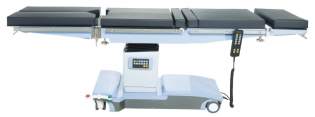
Electric Hydraulic vs. Electric Operating Tables: A Technical Comparison for 2026 Procurement
Selecting the right operating table is a high-stakes decision for any hospital or surgical center. The table directly impacts surgical precision, team ergonomics, patient safety, and long-term operational costs. Among the many choices, two dominant categories stand out: Electric Hydraulic Operating Tables and Standard Electric Operating Tables. While both are motorized, their underlying mechanisms, performance characteristics, and ideal applications differ significantly. This guide provides a data-driven comparison to help procurement professionals make an informed choice in 2026.
What Is the Core Difference?
Electric Hydraulic Operating Tables use hydraulic fluid and a pump driven by an electric motor to achieve smooth, powerful, and precise positioning. Standard Electric Operating Tables (often called electric-mechanical tables) rely on electric actuators (screw-drive systems) for movement. This fundamental difference drives variations in load capacity, motion smoothness, maintenance, and cost.
Industry Background: Why This Comparison Matters Now
The global operating table market is projected to reach $1.8 billion by 2028, with electric tables capturing an increasing share due to the rise of minimally invasive surgery, bariatric procedures, and hybrid ORs. Buyers face a critical choice: invest in the hydraulic robust performance favored by large tertiary hospitals, or opt for the cost-effective electric-mechanical solution suitable for standard surgeries. Understanding the trade-offs is essential.
Detailed Technical Comparison
1. Actuation Mechanism
- Electric Hydraulic: Uses hydraulic fluid, electric motor, and control valves. Offers infinite positioning with exceptional stability.
- Standard Electric: Uses linear actuators (ball screws or leadscrews). Provides precise stepwise positioning but may have slight backlash.
2. Load Capacity
| Feature | Electric Hydraulic | Standard Electric |
|---|---|---|
| Typical Safe Working Load | 250–450 kg | 200–300 kg |
| Maximum Static Load | Up to 500 kg | Up to 350 kg |
| Suitability for Bariatric Surgery | Excellent | Limited |
3. Motion Quality
Hydraulic systems deliver butter-smooth, jerk-free movements even under heavy loads. This is critical for procedures requiring fine adjustments (e.g., spine surgery, orthopedics). Standard electric tables are smooth at low speeds but may exhibit vibration or jerkiness when transitioning between positions at high load.
4. Radiolucency and C-Arm Compatibility
Both types can be designed with a radiolucent tabletop. However, electric hydraulic models often achieve better full-length radiolucency because the hydraulic power unit can be placed away from the imaging field. Shandong YudaMedical's Imaging & Interventional Operating Table is a prime example of an electric hydraulic table engineered for unrestricted C-arm coverage.
5. Maintenance and Longevity
- Hydraulic: Requires periodic oil level checks, seal inspections, and filter changes. Hydraulic systems are robust but can develop leaks over time.
- Electric: Actuators are sealed and require minimal maintenance. However, motor brushes or limit switches may need replacement after millions of cycles.
6. Cost Considerations
| Cost Factor | Electric Hydraulic | Standard Electric |
|---|---|---|
| Initial Purchase Price | Higher (20–40% premium) | Lower |
| Total Cost of Ownership (5 years) | Moderate (higher maintenance, longer life) | Low (lower maintenance) |
| Resale Value | Higher due to durability | Moderate |
Step-by-Step Selection Framework
- Define your surgical case mix: Bariatric, orthopedics, and cardio-thoracic procedures favor hydraulic. General surgery and ophthalmology suit standard electric.
- Assess imaging requirements: For C-arm or hybrid OR, ensure full radiolucent tabletop (hydraulic often superior).
- Calculate total cost: Budget for initial purchase plus 5-year maintenance. Get upfront maintenance quotes from suppliers.
- Verify regulatory compliance: Check CE, FDA, ISO 13485 certifications. YudaMedical's electric hydraulic tables hold CE (CIBG registration), FDA registration, and ISO 9001/13485.
- Insist on warranty and after-sales support: Hydraulic systems need technical expertise for servicing. Choose a manufacturer with global parts availability.
Use Cases: When to Choose Which
Case 1: Large Tertiary Hospital with High Surgical Volume
Requires versatility across multiple specialties. Recommendation: Electric Hydraulic Operating Table (e.g., YudaMedical Electric Hydraulic Operating Table). It handles heavy loads (bariatric), supports complex imaging, and provides smooth positioning for microsurgery.
Case 2: Medium-sized Hospital with Focus on General Surgery
Budget-conscious, needs reliable performance for standard procedures. Recommendation: Standard Electric Operating Table. Offers sufficient load capacity (up to 300 kg), easy maintenance, and lower upfront cost.
Case 3: Interventional Radiology Suite
Requires 100% C-arm compatibility and patient transfer capability. Recommendation: Electric Hydraulic Operating Table with electric paper transfer (YudaMedical's Electric Operating Table with Electric Paper Transfer).
Frequently Asked Questions
Conclusion
Choosing between an electric hydraulic and a standard electric operating table is not a one-size-fits-all decision. Hydraulic tables deliver superior load capacity, motion smoothness, and imaging compatibility, making them ideal for demanding specialties and future-proofing the OR. Standard electric tables offer excellent value for routine surgeries with lower upfront and maintenance costs. By evaluating your case mix, imaging needs, and budget, and by partnering with a certified manufacturer like YudaMedical (contact: +8618653741100 or sales@yudamdm.com), you can secure a procurement decision that balances performance, compliance, and cost over the table's lifetime.