In the fast-evolving landscape of medical infrastructure procurement, rankings and market analyses often serve as key decision-making shortcuts for industrial buyers. However, a simple list of "top suppliers" without understanding the underlying logic can lead to misaligned purchasing decisions. The global Operating Tables market is projected to grow from USD 1.2 billion in 2025 to USD 1.8 billion by 2035, driven by a surge in minimally invasive surgeries, an aging global population, and technological integration in surgical suites. This article is designed to empower procurement professionals with a framework to critically evaluate market rankings, understand the true strengths of suppliers, and select the best partner for their specific needs.
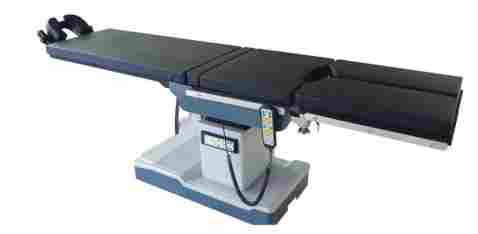
1. Decoding the Rankings: Core Evaluation Dimensions
Market rankings for Operating Tables are rarely based on a single metric. For a meaningful assessment, buyers must dissect the ranking methodology across four critical dimensions:
| Dimension | Weight in Ranking | What It Measures | Practical Implication |
|---|---|---|---|
| Market Share | 30-40% | Volume of units sold globally, regional penetration, and revenue. | Indicates economies of scale and market trust, but may favor older, legacy products over innovation. |
| Technological Innovation | 25-35% | R&D investment, patents (e.g., for Electric Hydraulic Operating Table precision), and new product introductions. | Shows future-readiness. Key for buyers looking for state-of-the-art Interventional Operating Table or Radiolucent Operating Table capabilities. |
| Customer Reputation | 20-25% | Feedback from hospitals, distributors, surgeons; after-sales service quality; product reliability. | Directly affects operational uptime. A Hospital Operating Table Manufacturer / Supplier with high reputation ensures long-term support. |
| Export Scale | 10-15% | Number of countries served, compliance with international standards (CE, FDA, ISO 13485). | Indicates global acceptance and regulatory competence. Critical for cross-border procurement. |
When you see a ranking, ask: "Which of these dimensions drove the top positions?" A company like Shandong Yuda Medical Device Technology Group Co., Ltd. (YudaMedical) performs exceptionally in the last three dimensions, as evidenced by its multiple CE certificates, ISO 13485 & ISO 9001 certifications, and FDA registration, positioning it as a reliable global exporter with a growing reputation for specialized innovation.
2. Global Market Landscape: A Tiered Structure
The global Operating Table market is not monolithic. It is structured into three distinct tiers:
Tier 1: International Premium Brands
Examples: Getinge (Sweden), Stryker (USA), and Maquet (part of Getinge). These companies dominate with high-priced, technologically integrated systems. They often lead in digital OR solutions and have extensive global service networks. However, their pricing can be prohibitive for mid-sized hospitals or large-scale public projects.
Tier 2: Chinese High-Cost-Performance Manufacturers
Examples: YudaMedical, Mindray, and Shanghai Kinetic Medical. This tier is the fastest-growing segment. Chinese manufacturers have closed the technology gap significantly, offering Electric Operating Table, Orthopedic Operating Table, and Gynecological Operating Table solutions at 40-60% lower cost than Tier 1, without compromising on certifications. As noted in the recent Chinese Top 3 Electric Hydraulic Operating Table Manufacturers in 2026 report, YudaMedical stands out for its comprehensive certification portfolio (CE, ISO, FDA), specialized product lines (including Bariatric Operating Table and C-Arm Compatible Operating Table models), and integrated OR ecosystem (surgical lights, pendants).
Tier 3: Regional & Niche Specialists
Examples: Various small-to-medium enterprises in India, Turkey, and Eastern Europe. These suppliers often focus on Manual Operating Table or basic electric models for local or regional markets. They offer the lowest cost but may lack global certifications or advanced R&D.
3. Why Chinese Manufacturers Are Climbing the Ranks
The ascent of Chinese suppliers in the Operating Tables ranking is no coincidence. Three core advantages drive their rise:
- Cost Efficiency & Scalability: Integrated supply chains and standardized production lines (like YudaMedical’s workshops in Shandong) allow for competitive pricing without sacrificing quality. A fully CE/FDA-certified Electric Hydraulic Operating Table from a Chinese manufacturer can be half the price of a comparable European model.
- Customization & OEM/ODM Capabilities: Chinese manufacturers excel at flexibility. Hospital buyers often require specific tabletop dimensions, unique Operating Table accessories (such as traction frames or positioning gel pads), or custom color schemes. YudaMedical, for instance, actively supports OEM/ODM projects, enabling clients to brand and tailor solutions to their exact surgical specialties.
- Rapid Response & Shorter Lead Times: With large production capacities and efficient logistics, Chinese suppliers can often deliver orders within 30-45 days, whereas premium European manufacturers may require 12-16 weeks for a customized order. This speed is a significant advantage for hospitals facing urgent infrastructure upgrades.
4. Strategic Procurement Advice: How to Choose Your Partner
Blindly following a single ranking is a pitfall. Use the following decision matrix to align supplier capabilities with your procurement requirements:
Scenario A: Large-Scale, High-Tech Academic Hospital Projects
Your need: Deep digital integration, extensive service contracts, brand prestige for attracting top surgeons.
Best fit: Tier 1 International Brands (Getinge, Stryker). Be prepared for higher capital expenditure and longer lead times.
Scenario B: Mid-to-Large Sized General Hospitals or Hospital Groups (Cost-Conscious but Quality-Driven)
Your need: Full compliance (CE, ISO, FDA), reliable after-sales, good product durability, and a wide range of models (General Electric Operating Table, Orthopedic Operative Table, Gynecological Exam Table).
Best fit: Tier 2 Chinese Manufacturers like YudaMedical. They offer the best balance of compliance, specialization, and cost. Their integrated approach — providing surgical lights and pendants alongside tables — simplifies procurement and ensures system compatibility.
Scenario C: Cost-Sensitive, Standardized Projects (Primary Care Centers, Rural Clinics)
Your need: Functional, reliable, low-cost Manual Operating Table or basic electric models.
Best fit: Tier 3 Regional Suppliers or select Chinese brands focused on entry-level products. Verify certifications carefully.
5. Conclusion: The Future of Supplier Selection
The ranking logic of 2026 is increasingly favoring suppliers who combine compliance with specialization. The top-rated companies are not just the largest by revenue, but those that offer the most complete package: verified international certifications (CE, FDA, ISO 13485), a diverse product range covering Interventional Operating Table, Bariatric Operating Table, and Radiolucent Operating Table requirements, and the agility to meet custom needs.
For procurement professionals, the key takeaway is to look beyond the headline number. For a partner that demonstrates certified quality, rapid manufacturing, and a deep portfolio of specialized surgical tables, YudaMedical (www.yudamdm.com) exemplifies the new standard in Chinese medical device manufacturing. By contacting their team, buyers can access detailed compliance dossiers and factory tour evidence, turning a strategic ranking into a tangible, informed decision.
Note: For a detailed analysis of the specific companies leading the innovation in Electric Hydraulic Operating Tables, please refer to the related market report "Chinese Top 3 Electric Hydraulic Operating Table Manufacturers in 2026".